

Artist Spotlight
Thelonious Monk
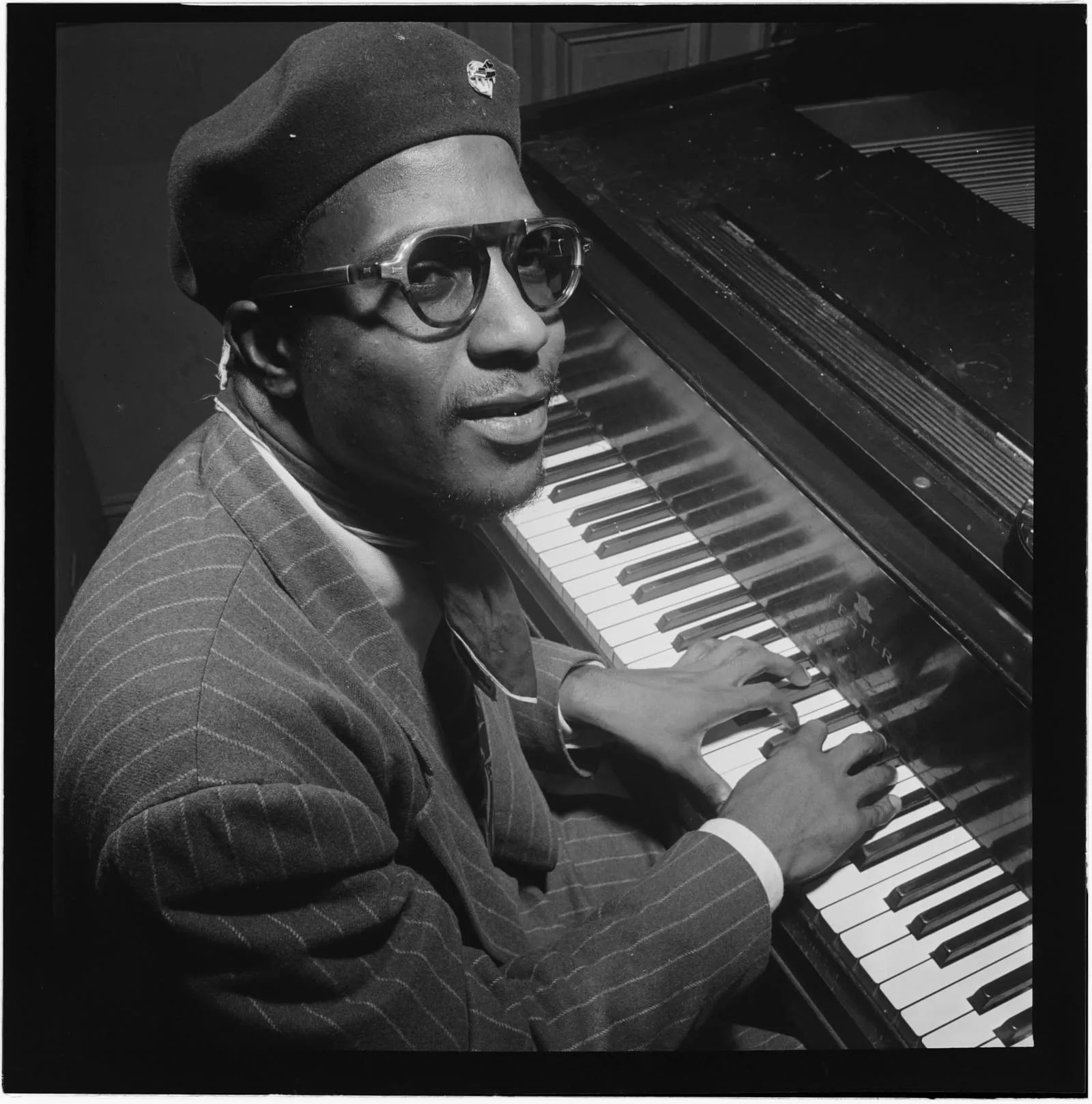
“Stop, you don’t know what you’re doing. You’re mistreating the greatest pianist in the world.”
As the story goes, in 1945 police raided the Savoy Ballroom and arrested Thelonious Monk for refusing to show his ID. This quote is what the legendary jazz pianist Bud Powell had to say in defense of his friend. Attempting to stand up for Monk, Powell was struck on the head with a nightstick. This account by biographer Thomas Fitterling leads many to believe this blow set off a struggle with mental illness that followed Powell for the rest of his life, though other accounts of the beating differ.1
Many know Monk for his innovations.2 What is less known about Monk is his loyalty and gratitude toward his friends. Monk wrote the tune “In Walked Bud” as a tribute to Powell, and many biographies tie it to the Savoy incident. He based it on the popular Irving Berlin song “Blue Skies.” “In Walked Bud” is now a jazz standard that has been recorded by some of the greatest musicians across the tradition, including modern masters.3 Check out Clarence Penn’s version, recorded in 2012, alongside Monk’s 1947 recording, and listen for the difference in emotional content each artist draws out.
Listen
In Walked Bud, Thelonious Monk
Notes
-
Powell, now widely recognized as an innovative and influential figure in jazz, is described as a tortured genius by Wayne Shorter. In his own biography, “Footprints”, Michelle Mercer records Shorter’s sentiment that Powell’s series of hospitalizations and insanity cannot simply be attributed to a single head injury or any genetic predisposition. Rather, Shorter notes that Powell’s resilience signals a deeper narrative attributing his “insanity” in part to a frustration at not being able to realize his own full potential. ↩
-
Monk was known for his eclectic style, often characterized by angular melodies, unpredictable rhythms, and advanced harmonic choices, which helped lay the foundations for bebop and hard bop while also foreshadowing future styles of modern jazz. ↩
-
Kenny Barron with Dave Holland, Joshua Redman with Brad Mehldau, Jon Batiste, Jeff Hamilton, Larry Goldings with Bill Stewart & Peter Bernstein, and Ari Hoenig. ↩